
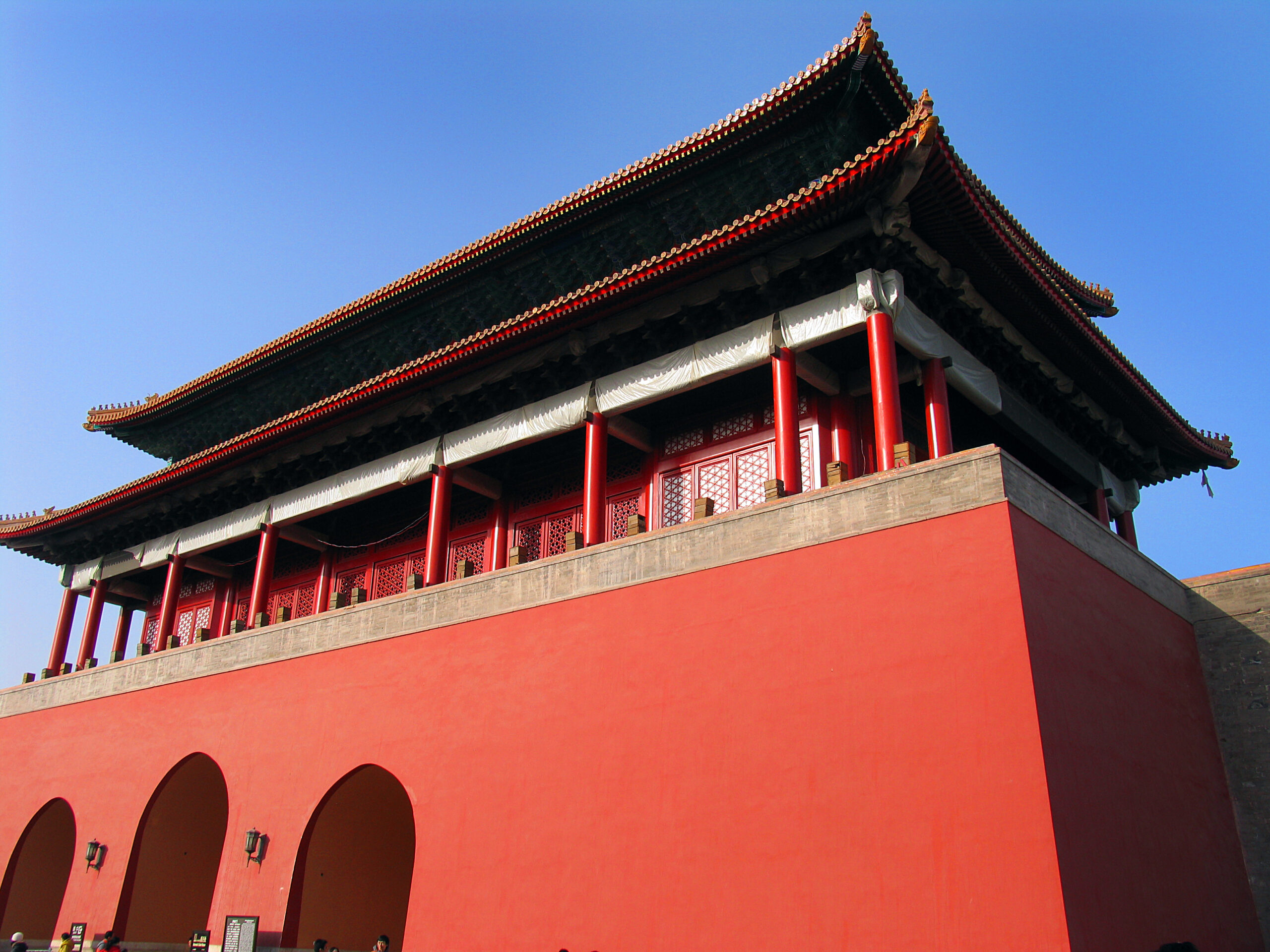
A Guide to the Forbidden City
If you’ve ever wanted to step inside the world of emperors, dragons, and centuries of imperial secrets, the Forbidden City is where you need to go. Sitting right in the heart of Beijing, this sprawling palace complex was once the beating heart of Chinese government — and today it’s one of the most fascinating places on Earth to explore.
A Palace Fit for Emperors
Construction began in 1406, and by the time it was finished, the Forbidden City was an almost unbelievable feat: 980 buildings spread across 720,000 square meters (that’s over 7.8 million square feet!). For nearly 500 years, from the Ming Dynasty all the way through the end of the Qing Dynasty, this was home to China’s emperors and their households. It wasn’t just a residence, either — it was the ceremonial and political nerve center of the entire empire.
Today, the complex houses the Palace Museum, and it holds the title of the world’s largest surviving palace complex. Walking through it, you’re walking through the literal center of centuries of Chinese history.
A Fortress as Much as a Home
The Forbidden City wasn’t just beautiful — it was built to keep people out (or in, depending on who was asking). A wall 7.9 meters high and 6 meters deep wraps around the entire complex, and outside that, a moat 52 meters wide adds another layer of protection. The walls themselves are architectural marvels, built with a rammed-earth core and faced with three layers of specially baked bricks, using techniques similar to those seen at the famous Xi’an City Wall.
Each corner of the wall has a watchtower, and these towers are actually the only structures visible from outside the walls — a reminder of just how private and guarded this place once was.
There are four main gates. The grand Meridian Gate marks the southern entrance — the main way in — while the Gate of Divine Might sits to the north, facing what’s now Jingshan Park. The East and West sides have their own gates too, nicknamed the “East Glorious Gate” and “West Glorious Gate.” Keep an eye out for the golden doornails decorating the gates — nearly all of them are arranged in a nine-by-nine grid, except for the East Glorious Gate, which quietly breaks the pattern with only eight rows.
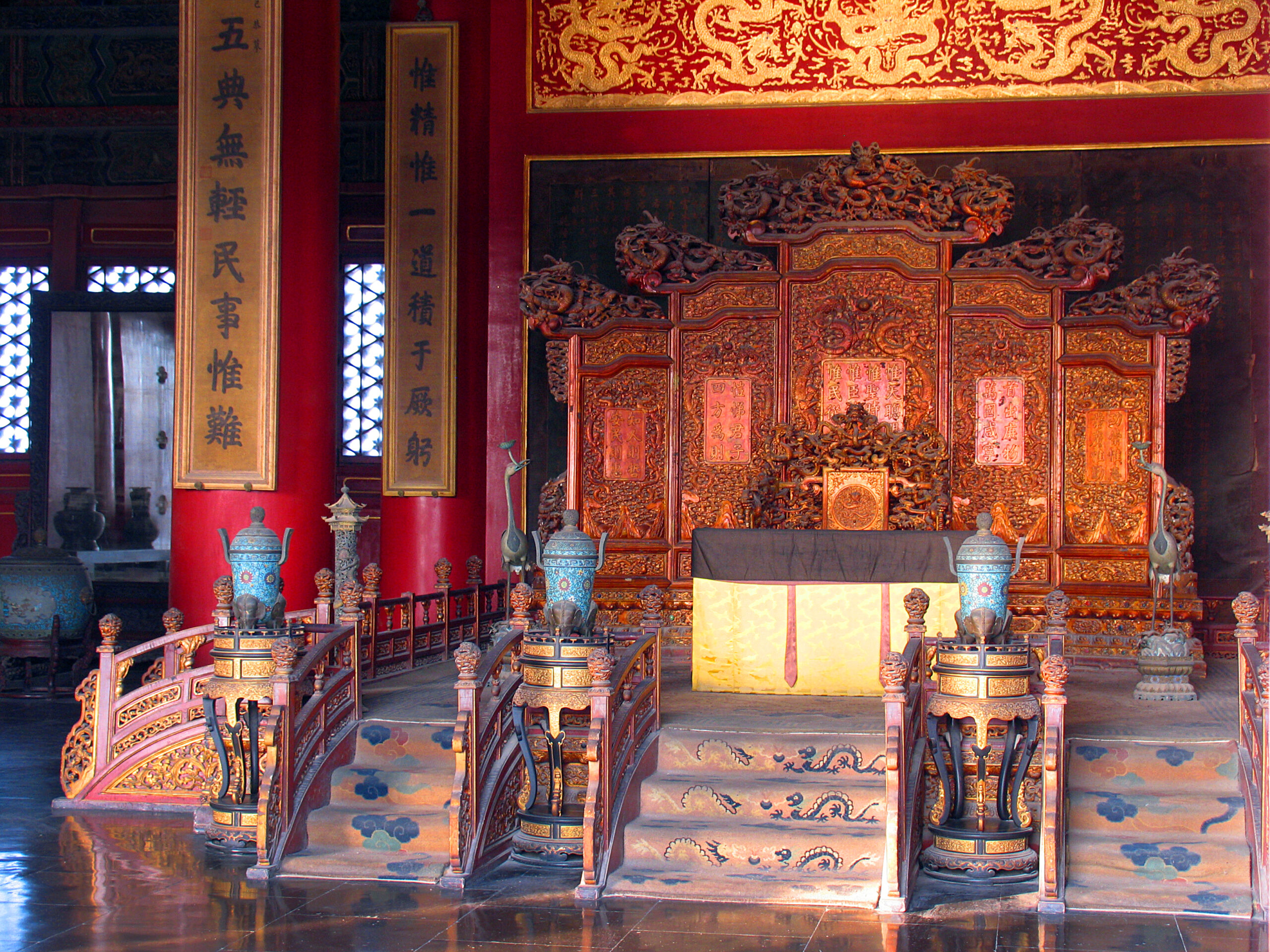
The Three Great Halls
At the heart of the Forbidden City are three magnificent halls that hosted the empire’s most important moments.
Tai He Dian (Hall of Supreme Harmony) is the star of the show — the largest and most important of the three. Perched on a three-tiered white marble base and rebuilt several times after fire damage, the current version dates back to 1695. It’s an enormous structure, standing over 35 meters tall, with a beautifully carved dragon coiled at the center of its ceiling, clutching a pearl in its mouth. This is where emperors held their grandest ceremonies: New Year celebrations, the Winter Solstice, coronations, and even the announcement of results from the imperial examinations.
Bao He Dian (Hall of Preserved Harmony) used clever architecture — removing six pillars from beneath the front eaves — to create a more open, spacious feel. Emperors would change into ceremonial robes here before big events, and it also hosted lavish New Year and Lantern Festival banquets for dukes, princes, and ministers.
Feng Xian Dian (Hall for Ancestral Worship) served as the imperial family’s ancestral temple. This was where emperors honored their ancestors on birthdays, holidays, and other significant days — even offering seasonal fruits, vegetables, and freshly hunted game as tribute.
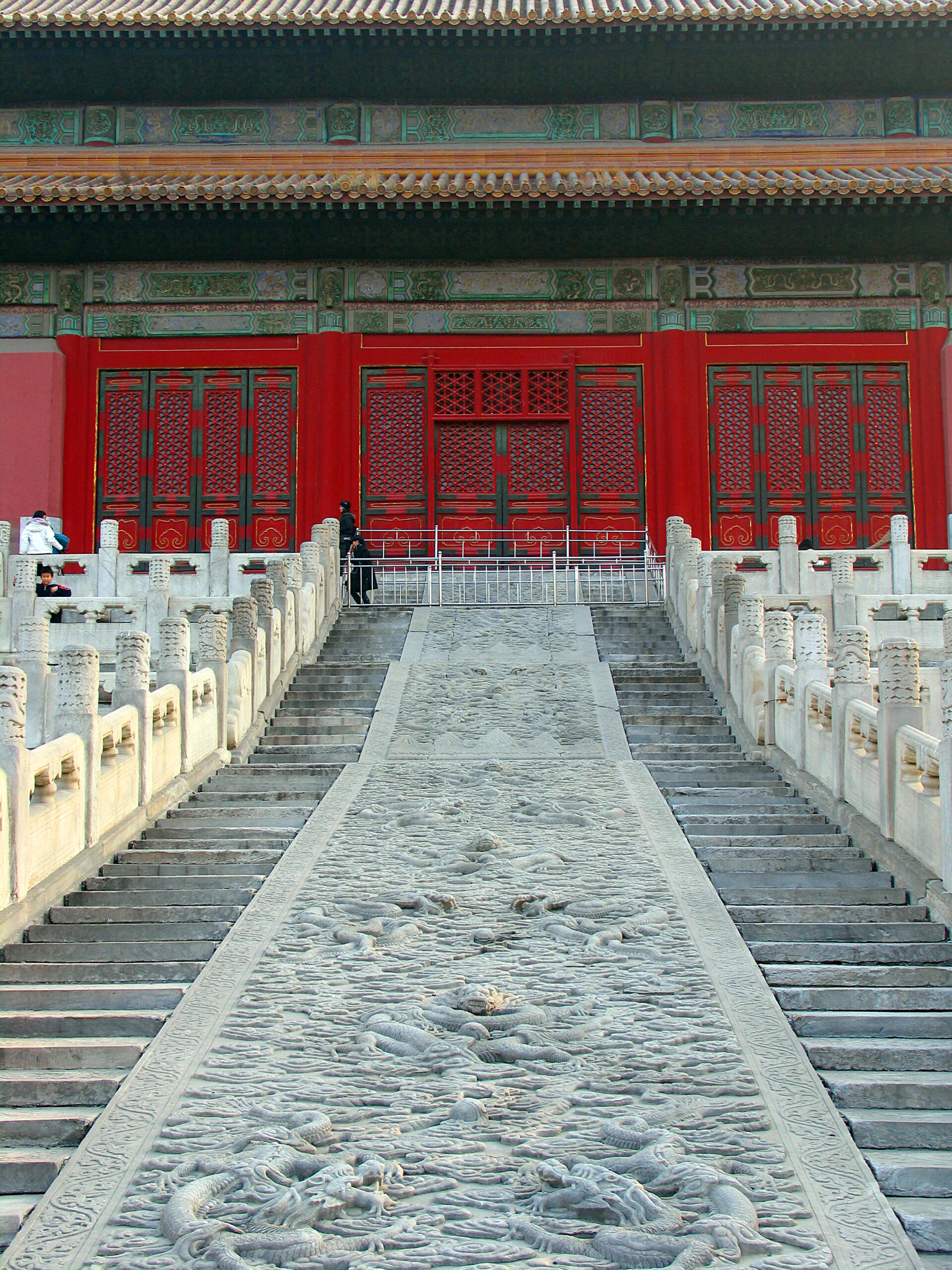
A City Built on Symbolism
Nothing in the Forbidden City was left to chance. Every color, number, and layout choice was steeped in philosophy and tradition:
- Yellow roof tiles symbolized the emperor himself
- Black tiles represented water
- Green tiles stood for wood
- The main halls were grouped in threes, representing Qian (Heaven)
- The inner court residences were grouped in sixes, representing Kūn (Earth)
Surviving the Centuries
The Forbidden City has seen its fair share of turmoil. During the Second Opium War in 1860, Anglo-French forces occupied the palace. In 1900, Empress Dowager Cixi fled the city during the Boxer Rebellion, and foreign troops moved in until the following year. Even after the founding of the People’s Republic of China in 1949, the complex faced threats — including during the Cultural Revolution, when Premier Zhou Enlai personally intervened, sending soldiers to protect it from destruction.
Despite everything, the Forbidden City still stands today, remarkably intact and endlessly captivating — a living reminder of the artistry, power, and philosophy that shaped imperial China for half a millennium.