
Yunnan means “the place south of the colorful clouds.” The province borders Vietnam, Laos, and Myanmar, and neighbors Guizhou, Guangxi, Chongqing, Sichuan, and Tibet within China — making it a meeting point of many landscapes, ecosystems, and ethnic groups.
• Capital: Kunming
• Area: 394,000 km² (152,124 mi²)
• Population (2010): 45,966,000
• Climate: Low-latitude monsoon climate of mountain-plateau terrain

The terrain shifts dramatically across the province. In the west, steep mountains and narrow valleys create a dramatic, often treacherous landscape. In the east, the land levels into a plateau of rolling hills. Scattered among these plateaus and mountains are fertile basins the locals call “Bazi” — flat areas with rich soil and rivers, ideal for farming. Kunming itself sits in one of these basins.
Yunnan is one of China’s most biodiverse regions, home to more than 18,000 plant species and animals including elephants and the endangered golden monkey. Its natural landmarks include Jade Dragon Snow Mountain, Tiger Leaping Gorge, Meili Snow Mountain, and the Stone Forest.
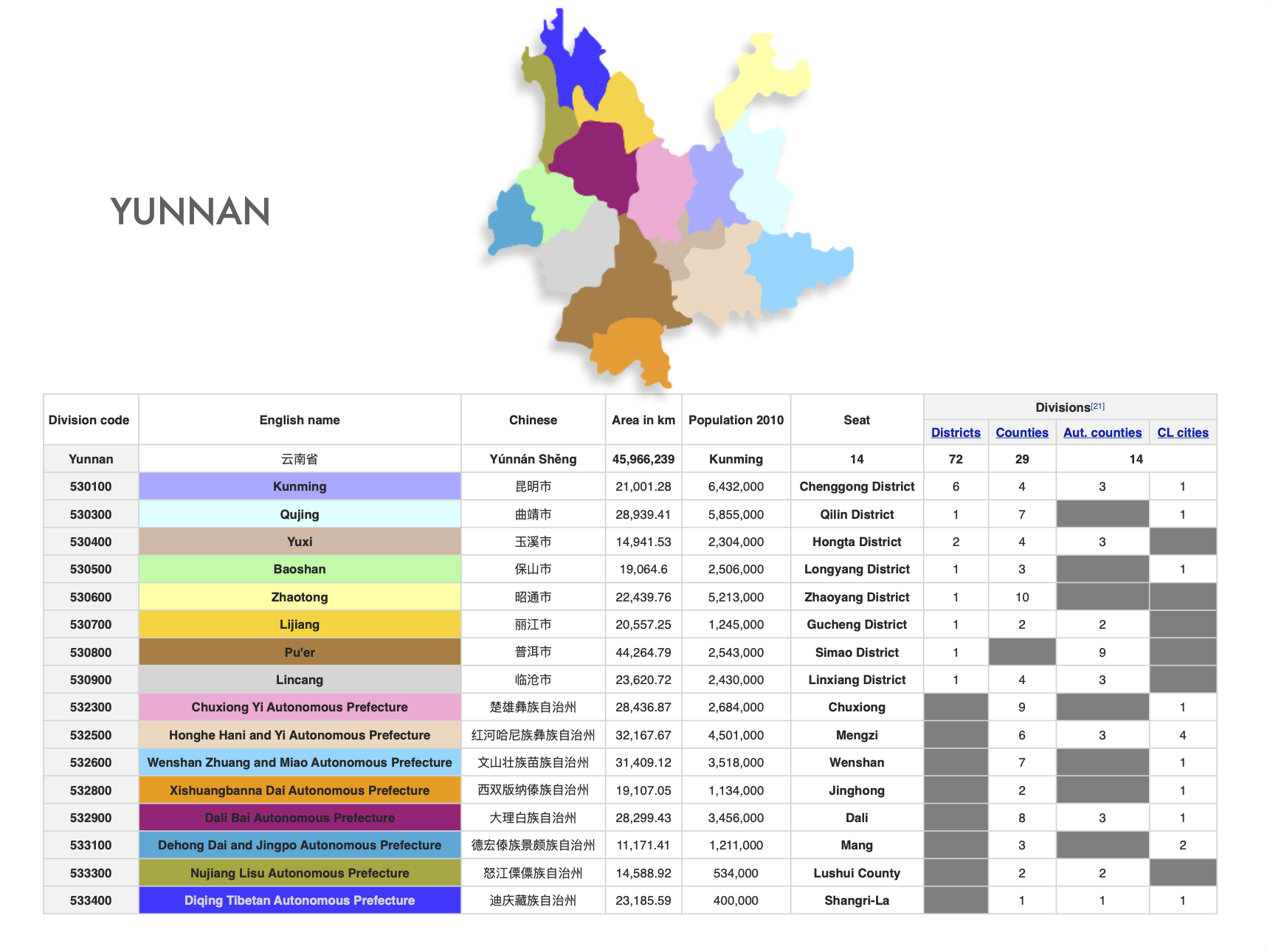
Ethnic diversity: Yunnan has more ethnic minority groups than any other Chinese province — about a third of its population. Of China’s 55 officially recognized minorities, 51 live in Yunnan, and 25 of those groups number more than 5,000 people. Some communities are spread across large areas; others live in small, tightly concentrated villages. Each group tends to have distinctive clothing, and often its own language and script. Notable festivals include the Torch Festival (Yi), the March Fair (Bai), the Water-Splashing Festival (Dai), the Zongge Festival (Jingpo), and the Knife Pole Festival (Lisu).
Yunnan Ethnic Housing
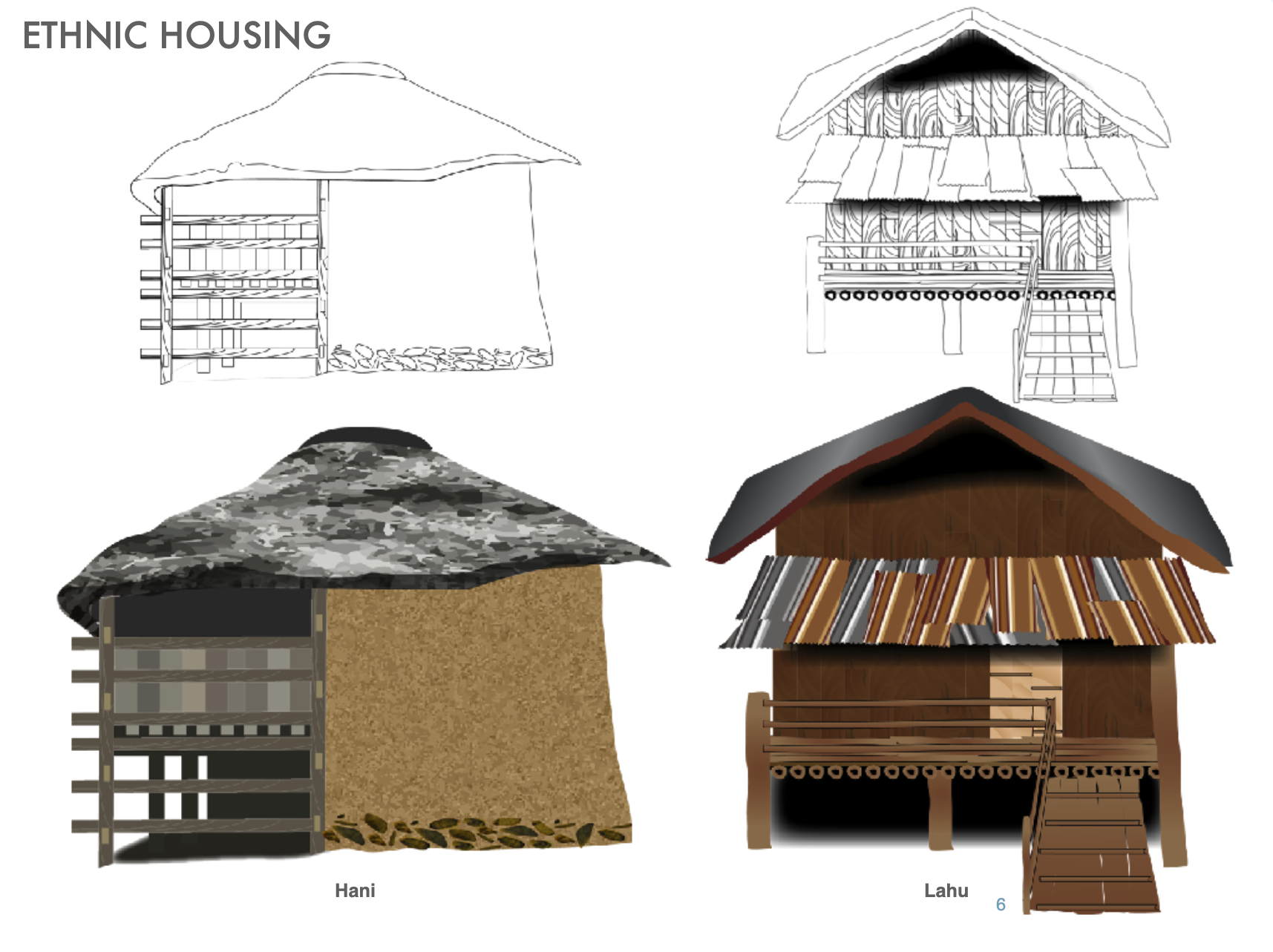
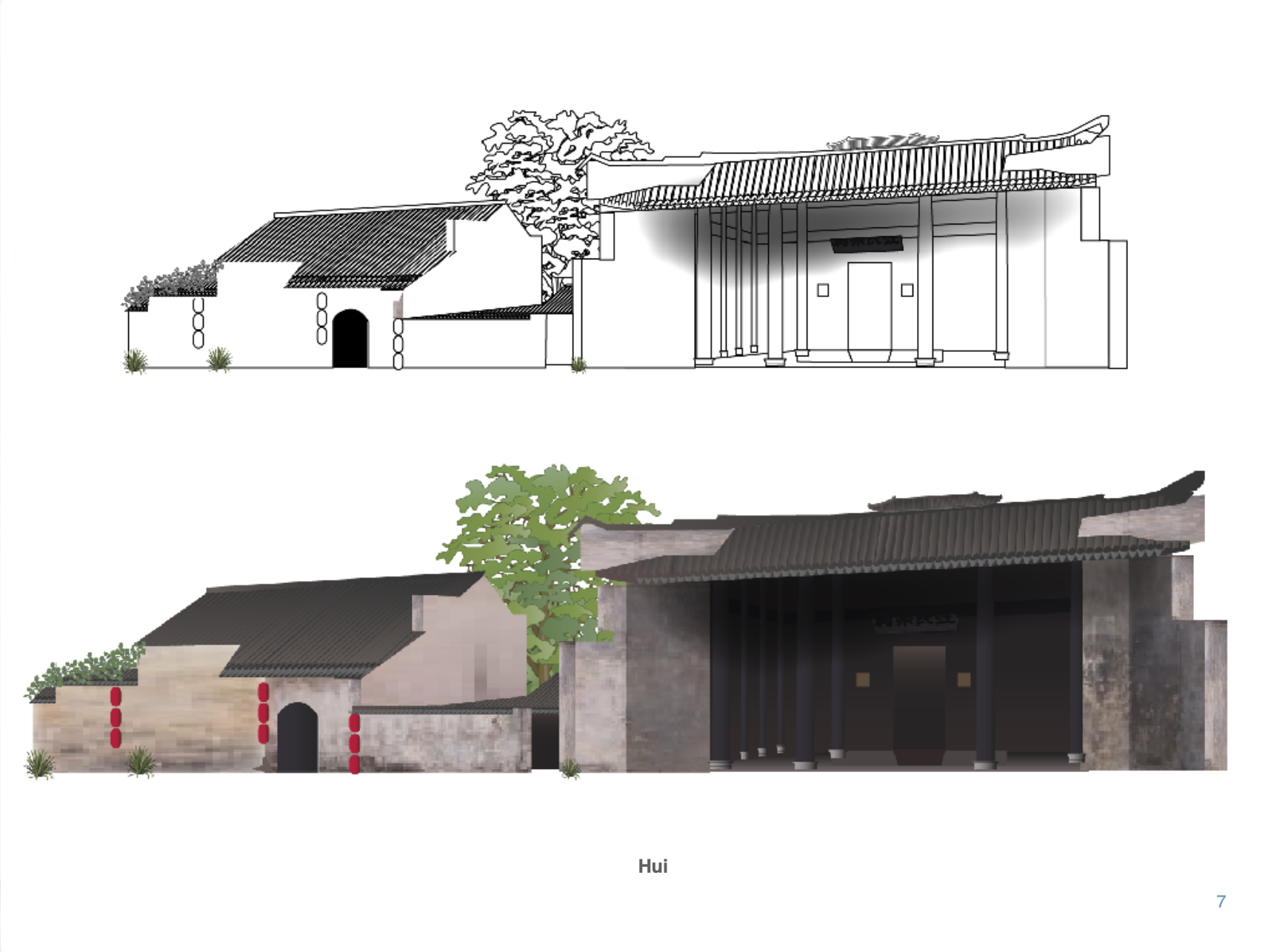
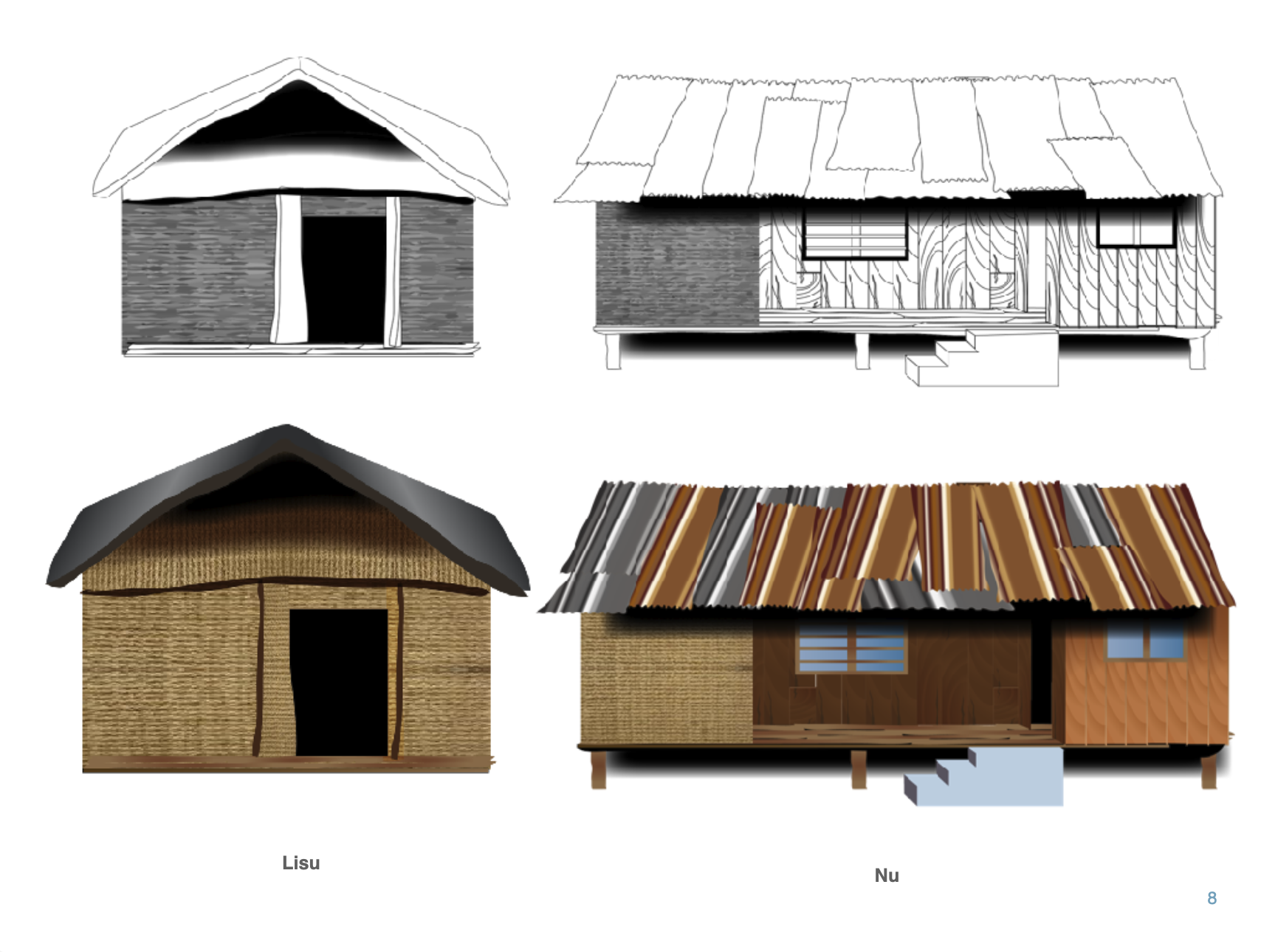
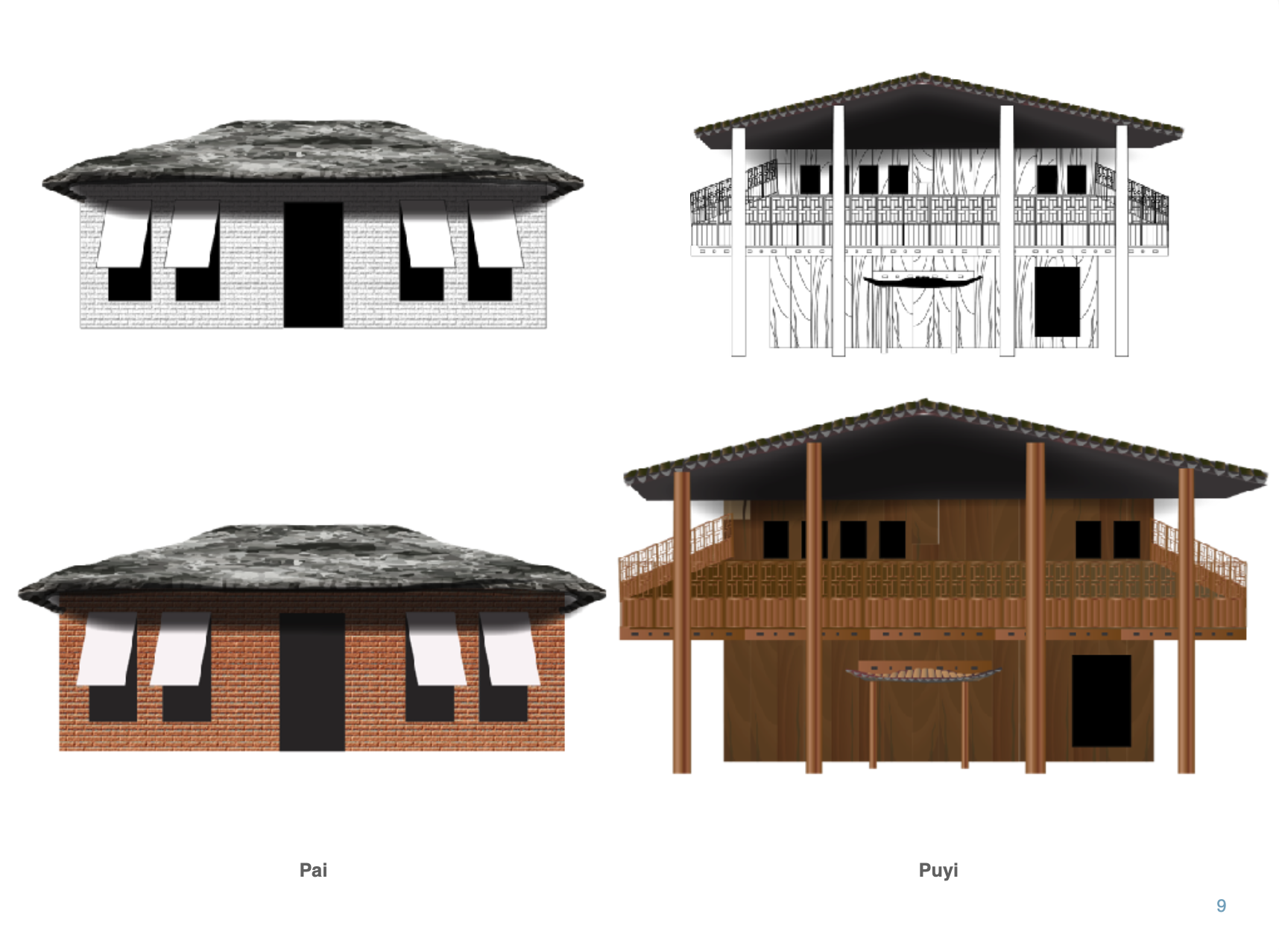
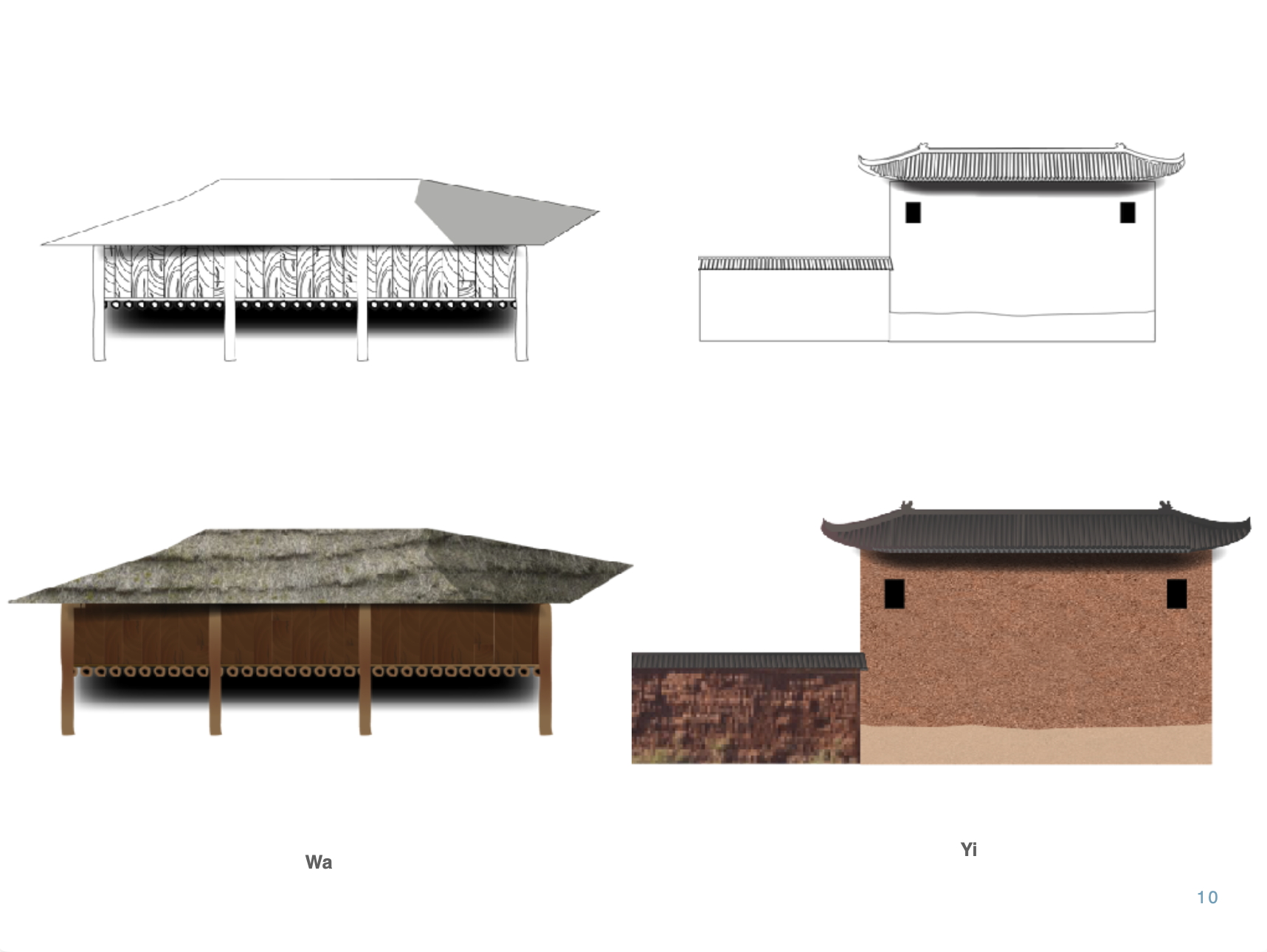
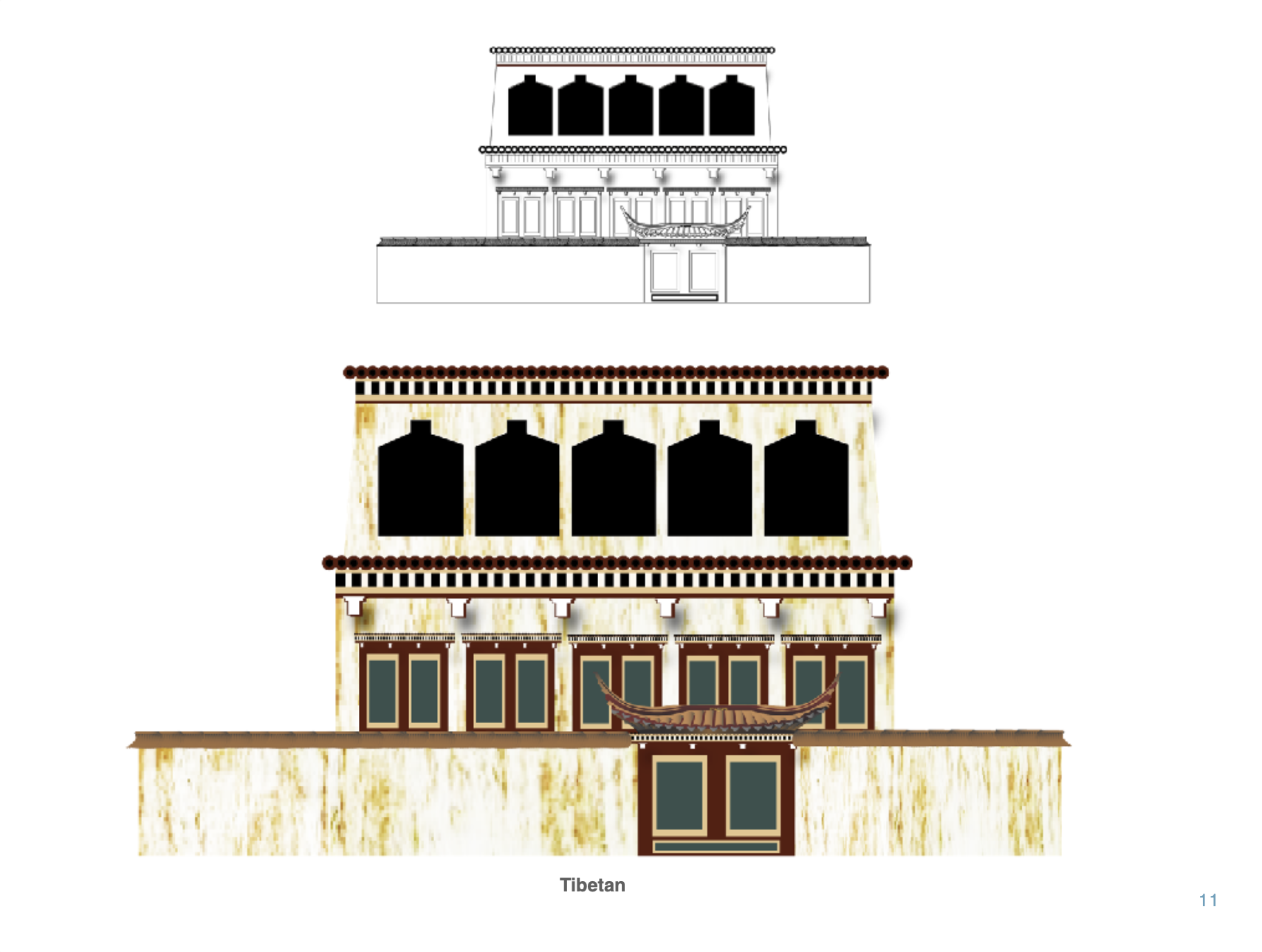
Kunming
Kunming’s name comes from an ancient tribe that lived near Dianchi Lake. Archaeological digs in the 1970s–90s confirmed a legendary “Ancient Dian Kingdom” here, founded around the 3rd century BC by General Zhuang Qiao.
By the Tang Dynasty, the city — then called Tuodong (“exploring the east”) — had grown into an important trading hub under the Nanzhao and later Dali Kingdoms. The Mongols under Kublai Khan conquered the Dali Kingdom and made Tuodong the provincial capital of Yunnan during the Yuan Dynasty. The Ming Dynasty later fortified the city with walls, which were removed in the 1990s as Kunming modernized.
During WWII, as Japan occupied China’s eastern coast, Kunming became a refuge for industry and academia — several top universities, including Peking, Tsinghua, and Nankai, relocated here and merged into the National Southwestern Associated University (today’s Yunnan Normal University).
Since the 1980s reforms, and especially after hosting the 1999 World Horticultural Exposition, Kunming has seen rapid tourism growth and foreign investment, though this modernization has come at some cost to its historic character.
Nearby: the Stone Forest (Shilin) — A UNESCO-recognized karst landscape of densely packed limestone pillars, some resembling human or animal shapes. Stone-step trails through the “Major Stone Forest” date to the late Ming Dynasty, and ancient rock carvings here document the history of the local Yi people. It’s considered one of the world’s finest examples of this type of karst terrain.