
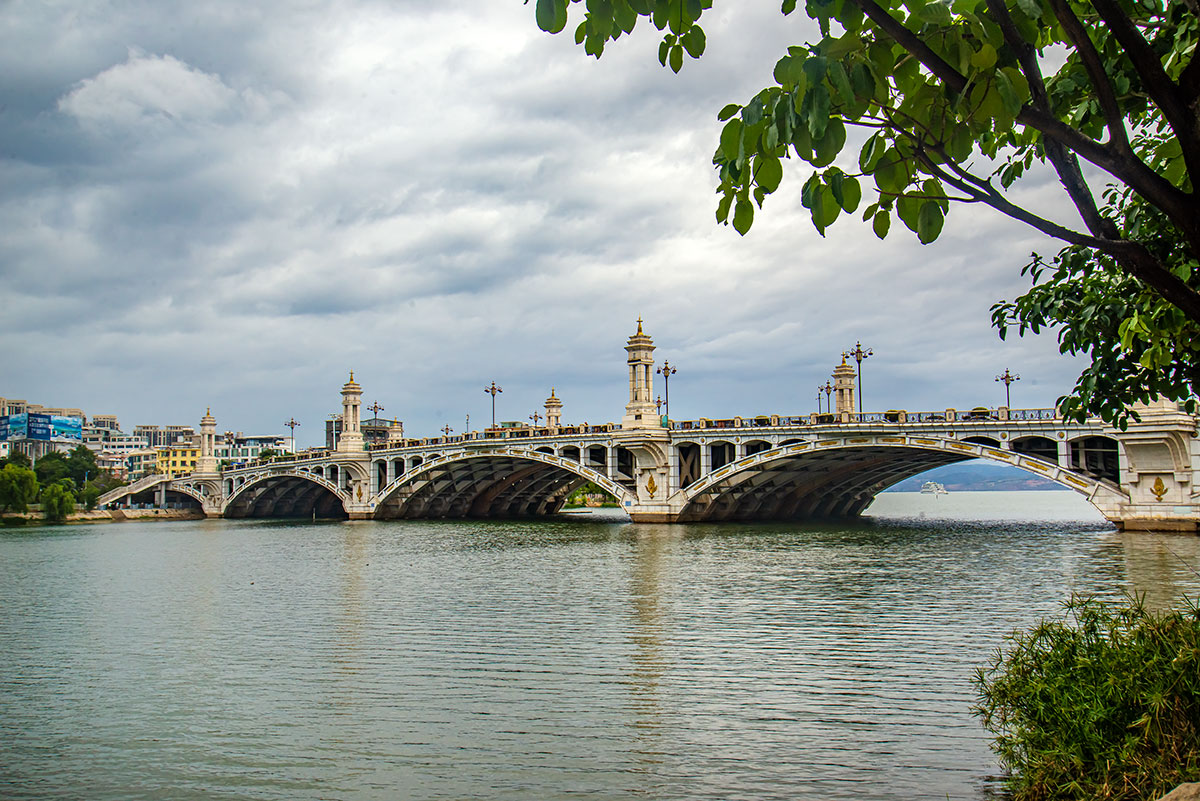
Dali Ancient City dates to 1382, during the Ming Dynasty, and has been listed among China’s top historical cities since 1982. Sitting between Erhai Lake and Cangshan Mountain, it was once a gateway on the Silk Road through southwest China and served as a military and government seat. The original walls stretched 6 km, stood 7.5 meters high, and were 6 meters thick, with gates at each compass point. Only the wall bases survive today, along with the restored North and South Wall Towers.
The city’s traditional Bai-style houses follow a distinctive layout known as “3 rooms and a wall screening” and “4 joints and 5 courtyards” — a design where a central courtyard and a decorative screening wall reflect afternoon sunlight back into the home, brightening the whole space. These houses are richly decorated with woodcarving, colored patterns, and marble work.
Key sites around Dali:
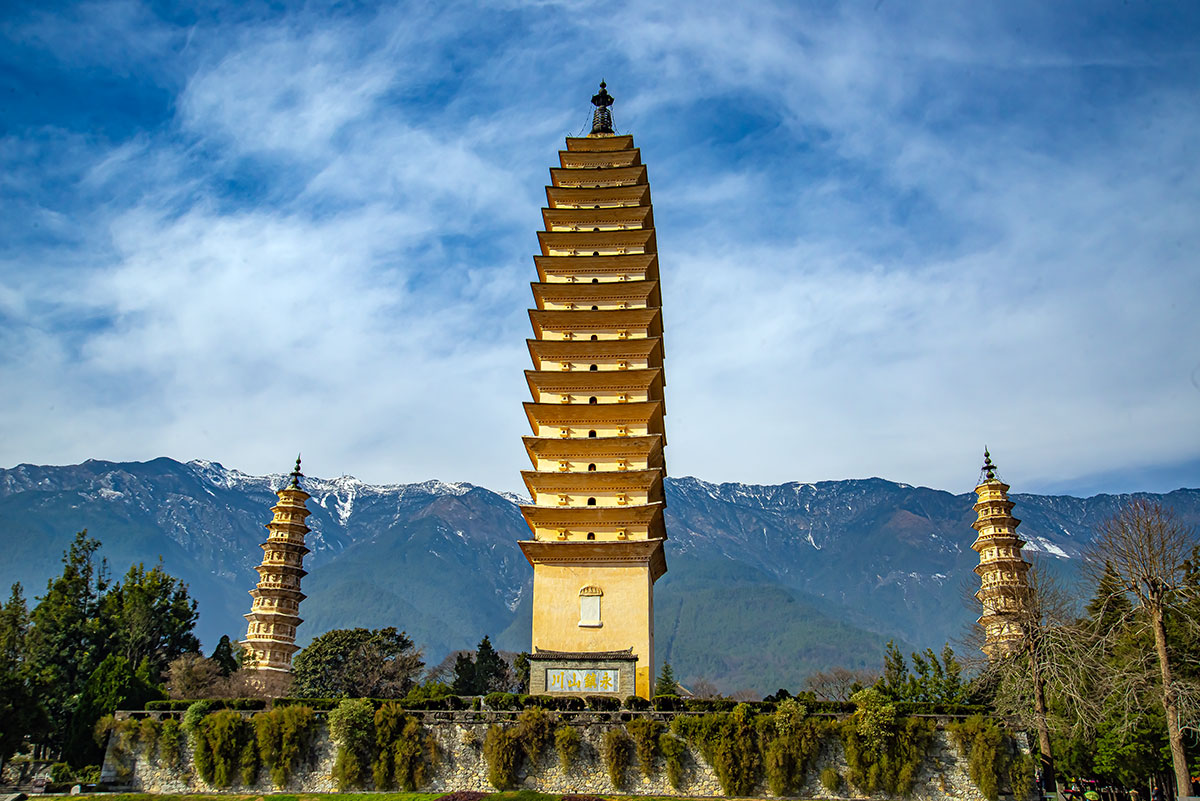
• Chongsheng Temple and the Three Pagodas — Over 1,800 years old, the three pagodas form a unique symmetrical triangle. The tallest, Qianxun Pagoda, stands 69 meters and dates to the Tang Dynasty. Excavations here uncovered Buddhist statues, texts, and medicinal ingredients that shed light on the region’s history.
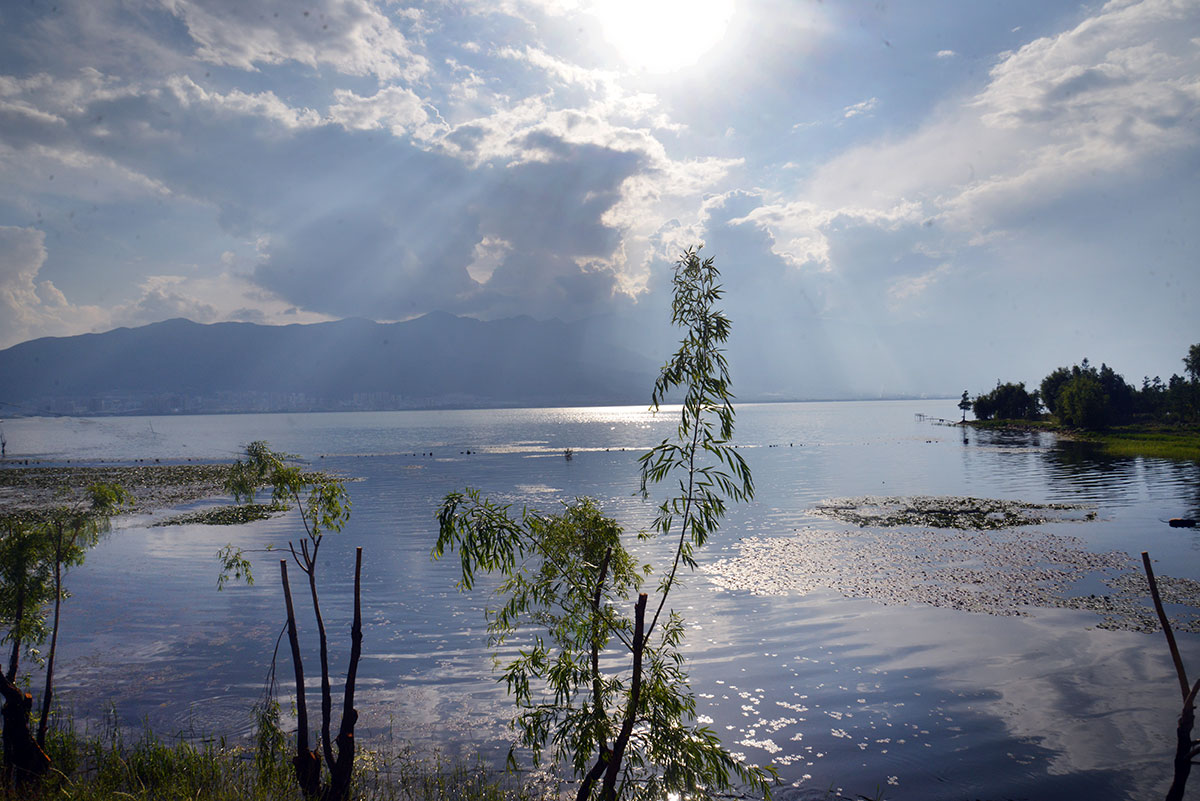
• Erhai Lake — Described poetically as “Silver Cangshan and Jade Erhai,” the lake is ringed by villages, temples, and islands, including Golden Shuttle Island and Xiaoputuo Island, a small ancient Buddhist temple site.
• Butterfly Spring Park — A spring-fed pool at the foot of Cangshan Mountain that draws swarms of butterflies each spring, tied to a local legend about two lovers who transformed into butterflies after fleeing a forced marriage.
• Xizhou — A town with nearly 200 heritage-listed Qing Dynasty homes, many still occupied. Best explored with a local guide.
• Shaping Market and Wase Market — Weekly rural markets offering a glimpse of everyday Bai and local life, including livestock trading.
• Silverwork at Shibalipu — An old tea-horse road trading post where visitors can watch traditional silversmithing, a craft tracing back over 1,000 years to the Nanzhao Kingdom.
• Jizu Mountain — A multi-day pilgrimage hike (or horse/cable-car option) to temple-covered slopes shaped like a chicken’s foot, with a demanding summit at 3,200 m.
The Dai people, a distinct ethnic minority concentrated in Xishuangbanna and Dehong prefectures, also have a presence in the region. They’re known for stilt houses raised above flood-prone ground, spicy and sour cuisine, an alphabetic script separate from Chinese characters, and festivals like the Water-Splashing Festival that marks their New Year.