
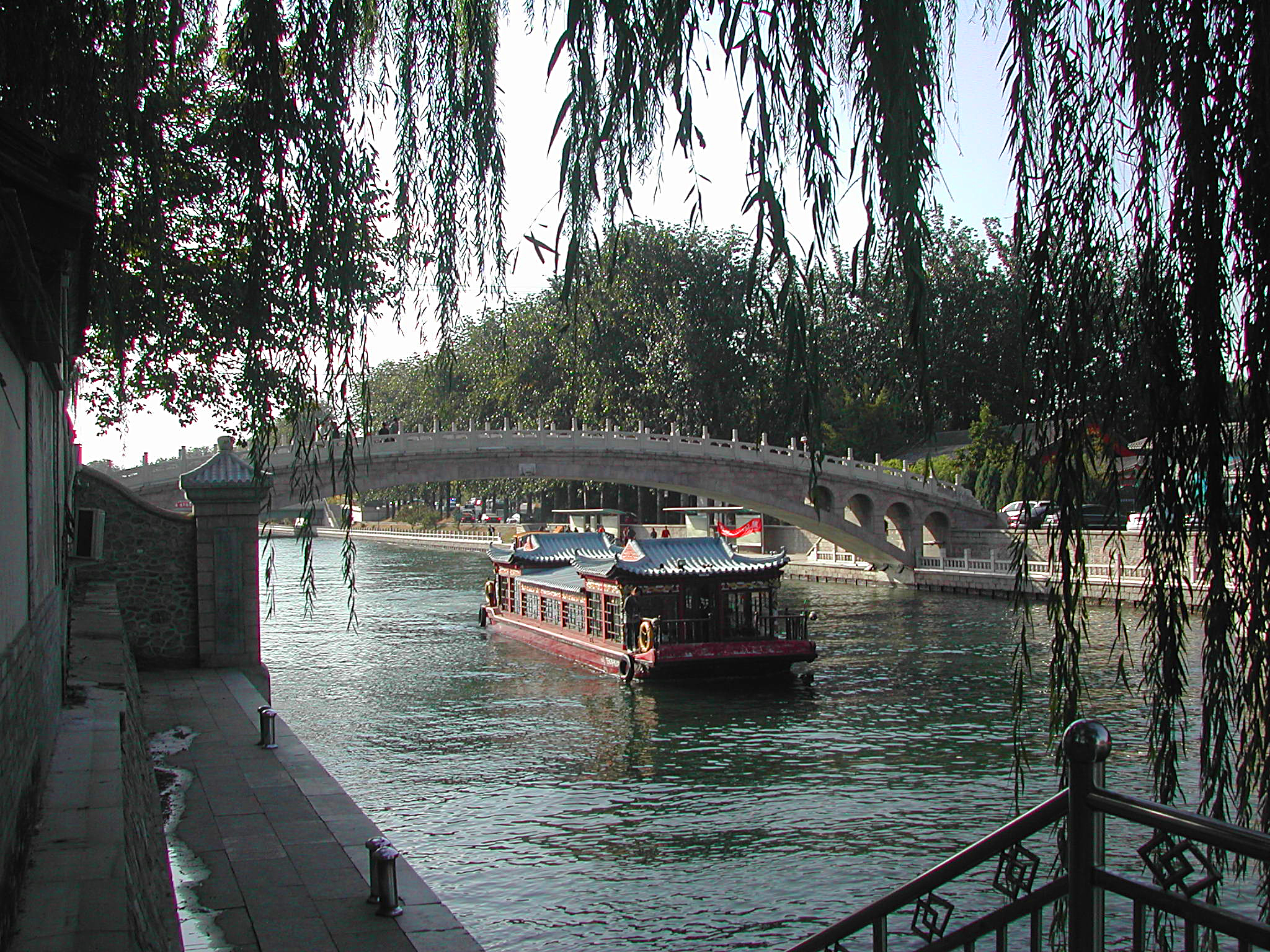
If the Forbidden City was where China’s emperors *worked*, the Summer Palace was where they went to unwind. Tucked into the northwest suburbs of Beijing, this sprawling 290-hectare garden estate is a world of shimmering lakes, wooded hills, painted corridors, and pavilions built purely for pleasure. It’s less “seat of imperial power” and more “the world’s most elaborate backyard” — and it’s just as captivating as its more famous sibling downtown.
## A Garden Fit for an Empire
The Summer Palace began life in 1750 under Emperor Qianlong, who built it as a birthday gift for his mother and originally named it the Garden of Clear Ripples. From there, it evolved into a full-blown pleasure garden for generations of emperors and empresses — a retreat from the formality of court life.
The setting alone is stunning: the West Hill and Jade Spring Hill rise in the distance, ancient pines and cypresses crowd the slopes, and grand halls and temples cluster along Longevity Hill. But the real showstopper is water — Kunming Lake covers roughly three-quarters of the entire palace grounds, complete with a causeway inspired by the famous West Lake in Hangzhou and three small islands meant to represent the mythical celestial islands said to float in the East Sea of China.
Like the Forbidden City, though, the Summer Palace has a turbulent history. It was burned to the ground by Anglo-French forces in 1860, only to be resurrected in 1886 — thanks to Empress Dowager Cixi, who famously diverted naval funds toward the reconstruction. Disaster struck again in 1900 when the Eight-Power Allied forces damaged it a second time, and it was rebuilt once more in 1902. The public didn’t get to enjoy any of this beauty until 1914, and it wasn’t formally opened as a park until 1924. By 1998, UNESCO recognized it as a World Heritage Site, and in 1992 it had already been praised as one of the most perfectly preserved imperial gardens on Earth.
## Through the Front Door
Visitors enter through the **East Palace Gate**, an east-facing entrance with a gabled roof and a very deliberate design: two side doors for royal family members and court officials, and three grand central doors reserved exclusively for the Emperor, Empress, and Queen Mother. It’s a small architectural detail that speaks volumes about the rigid hierarchy of imperial China. Look down as you approach, and you’ll spot the Danbi Stairway — a stone carving of two dragons playing with a ball, moved here from the ruins of the Yuanmingyuan in 1937.
Just past the gate sits the **Hall of Benevolence and Longevity**, the first major building visitors encounter. Originally built in 1750 and burned down in 1860 like so much else here, it was rebuilt in 1888 and still holds its original furnishings — including a nine-dragon throne, delicate peacock-feather fans, and a red sandalwood screen. Out in the courtyard, a bronze *Kylin* — a mythical creature with a dragon’s head, a lion’s tail, deer horns, and cattle hooves — stands guard. Legend has it that Kylins protect against fire, which feels almost ironic given how many times this palace has burned and risen again.
## Where the Empress Watched Opera
Music and performance were central to life at the Summer Palace, and nowhere is that clearer than at the **Garden of Virtue and Harmony**, where the Emperor and Empress once watched Peking Opera performances. Its name roughly translates to “listen to a fine melody and the mind will be calm” — and it houses one of the three most celebrated opera theaters of the Qing Dynasty, spread across four courtyards along a traditional north-south axis.
Nearby, the **Hall of Jade Ripples** carries a heavier story. Originally built in 1750 for handling state affairs, it was rebuilt in 1892 as living quarters for Emperor Guangxu — and became the place where he was confined after his failed 1898 reform movement, which had put him at odds with Empress Dowager Cixi and much of the court. Just behind it sits **Yiyun House**, once a book repository named for a fragrant plant believed to ward off moths, and later home to Empress Longyu, Cixi’s niece, after her marriage to Guangxu.
The **Hall of Joyful Longevity**, perched with Kunming Lake in front and Longevity Hill behind, began life as a birthday gift for Qianlong’s mother before eventually becoming Empress Dowager Cixi’s own residence. Bronze deer, cranes, and vases arranged outside symbolize peace, while the surrounding flowers represent prosperity — a garden designed to speak in symbols as much as scenery.
## The Longest Hallway You’ll Ever Walk
Few features of the Summer Palace are as delightful — or as photographed — as the **Long Gallery**, a covered corridor stretching an astonishing 728 meters along the southern foot of Longevity Hill, running parallel to Kunming Lake. It’s the longest corridor of its kind in any classical Chinese garden. Qianlong built it so his mother could enjoy the scenery no matter the weather, and after it was destroyed in 1860, Cixi had it rebuilt in 1886 — reportedly walking its length herself every morning after breakfast.
Walk it today and you’ll pass beneath more than 14,000 hand-painted scenes, one on every single beam and crossbeam, ranging from landscapes to legends to scenes from classic literature. It’s basically an open-air art gallery disguised as a walkway.
## Temples, Towers, and a Very Strange Mystery
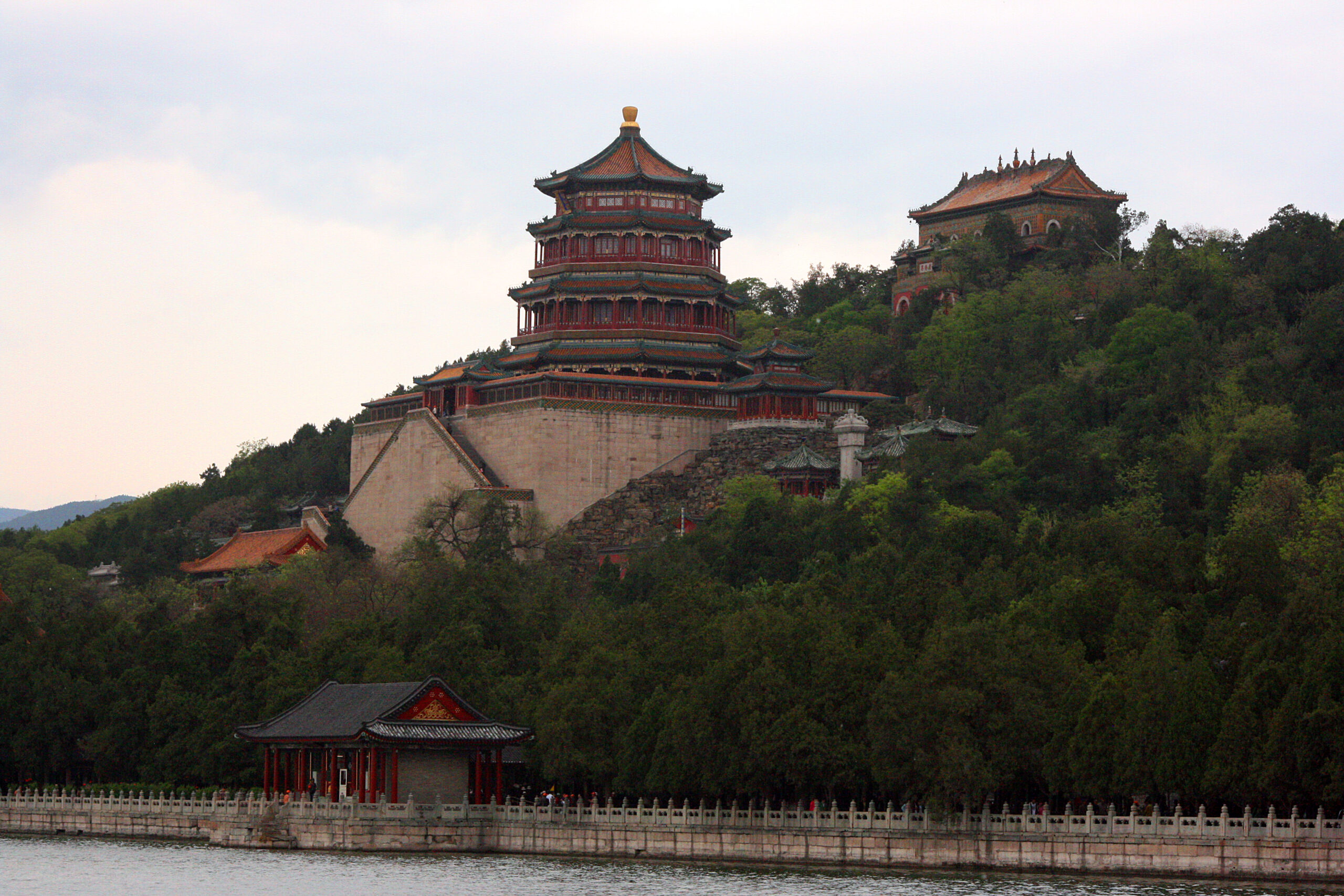
Rising above it all is the **Tower of Buddhist Incense**, the tallest structure in the entire Summer Palace at about 41 meters, perched on a 21-meter stone foundation on the hillside. It’s considered a masterpiece of classical Chinese architecture and commands sweeping views over Kunming Lake below.
Elsewhere on Longevity Hill, the **Hall of the Sea of Wisdom** dazzles with its facade of glazed bricks and an astonishing 1,008 glazed Buddhist statues embedded in the outer walls. Inside sits a serene statue of Guanyin, the Goddess of Mercy, flanked by figures of Samantabhadra and Manjusri believed to date to Qianlong’s reign. Nearby, the **Hall of Utmost Blessing** offers some of the best views on the grounds — Cixi and her imperial concubines reportedly loved gathering there for summer outings.
And then there’s the **Baoyun Pavilion**, or “Golden Pavilion” — one of only three surviving large bronze buildings in China, cast in separate pieces and assembled on-site, a genuine engineering feat for its era. It comes with its own real-life mystery: around 1908, palace keepers noticed that ten of the pavilion’s bronze windows had vanished without explanation — no small disappearance, given their weight. The windows resurfaced decades later in the 1970s and, thanks to a wealthy patron who purchased and donated them, finally made their way back to the pavilion around 1993, closing the loop on a near-century-long puzzle.
Not far away, the **Hall of Dispelling Clouds** once hosted Cixi’s lavish 70th birthday celebrations — festivities that took a full six months to prepare, filled the palace with lanterns and ribbons, and included eight straight days of theater performances. Two bronze lions still stand guard out front, warding off evil spirits just as they were meant to over a century ago.
## A Garden Worth Getting Lost In
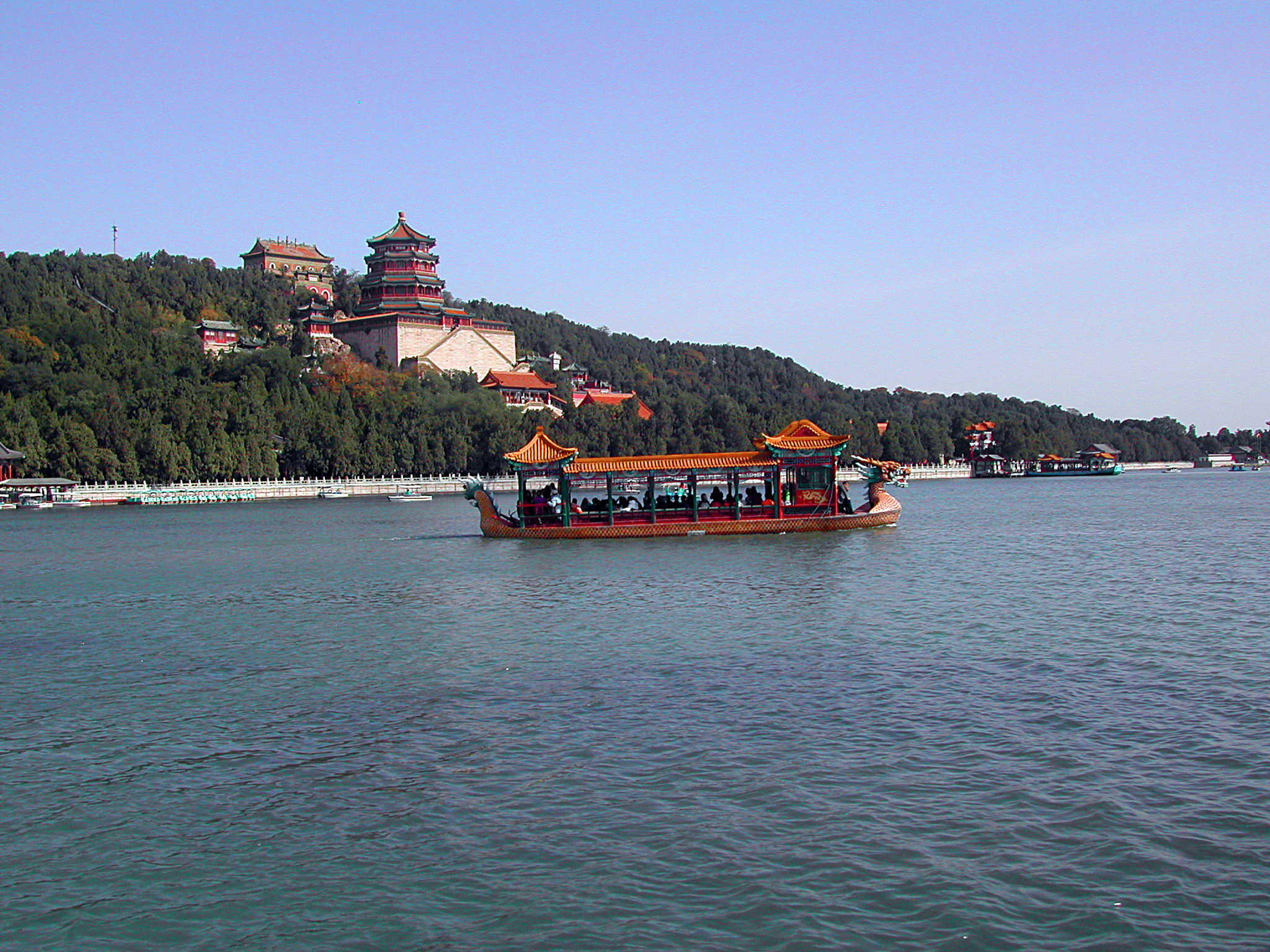
What makes the Summer Palace so special isn’t just any single hall or tower — it’s the way the entire landscape was composed like a piece of art, blending water, hills, architecture, and symbolism into one continuous experience. Every gate, every bronze animal, every painted beam was placed with intention. It’s a place built for beauty, and even after fire, war, and reconstruction, that beauty has endured.