

Shangri-La (formerly Zhongdian County) is the capital of the Diqing Tibetan Autonomous Prefecture, in Yunnan’s far northwest, bordering Tibet and Sichuan. It sits 315 km north of Dali and 659 km from Kunming. The name is Tibetan for “land of sacredness and peace.”
The region sits at the southeast edge of the Qinghai-Tibet Plateau, where Yunnan’s Three Parallel Rivers originate. It’s ringed by sacred snow-capped peaks:
• Meili Snow Mountain — Home to Kang Karpo, Yunnan’s highest peak at 6,740 m, surrounded by 13 more peaks over 6,000 m. One of eight mountains sacred to Tibetans, it remains unclimbed due to volatile weather.
• Baimang (Baima) Snow Mountain — A nature reserve and habitat for the endangered golden monkey.
• Haba Snow Mountain — Known for exceptional biodiversity, sometimes called a “gene bank” for plants.
The prefecture is dotted with alpine lakes (Bitahai, Napahai, Hehai, Shouduhai) and dramatic gorges, including Tiger Leaping Gorge. Wildflowers — over 200 kinds of azaleas, plus gentians, primroses, and lilies — carpet the region each spring. More than 13 ethnic groups, including Zhuang, Lisu, Han, Naxi, Bai, Hui, and Yi, live here.

Monasteries: The Songzanlin Monastery, 5 km from Shangri-La, is the largest of 24 lamaseries in the prefecture and recently reopened after a two-year restoration. Dongzhulin Monastery, built seven years earlier, hosts a major religious ceremony every October.
Prayer wheels, common throughout the area, have roots tracing back over a thousand years to Buddhist teachers in India and Tibet. Spun clockwise — following the sun’s path across the sky — they’re used to accumulate merit and are considered equivalent to reciting the scriptures they contain, making them accessible even to those who can’t read. The earliest recorded prayer wheels were written of by a Chinese pilgrim around 400 C.E. in Ladakh.
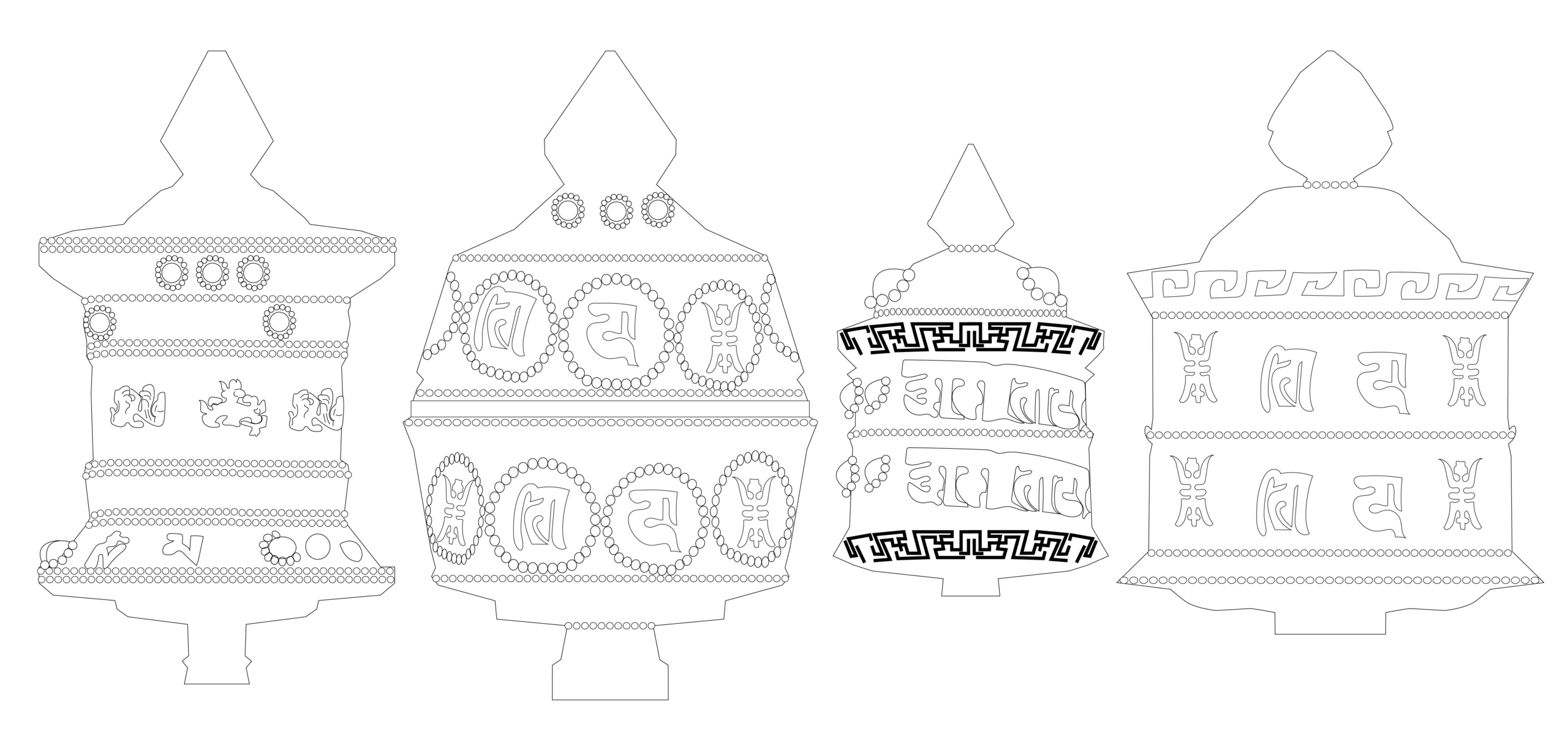
The concept of the prayer wheel is a physical manifestation of the phrase “turning the wheel of Dharma,” which describes the way in which the Buddha taught. Prayer Wheels originated from ‘The School of Shakyamuni sutra, volume 3 – pagoda and temple’ which states that, “those who set up the place for worship, use the knowledge to propagate the dharma to common people, should there be numerous Tantric practices whereby the Tantric practitioner visualizes mantras revolving around the nadis and especially around the meridian chakras such as the heart and crown. Therefore, prayer wheels are a visual aid for developing one’s capacity for these types of Tantric visualizations.
The spiritual method for those practicing with a prayer wheel is very specific (with slight variations according to different Buddhist sects). The practitioner most often spins the wheel clockwise, as the direction in which the mantras are written is that of the movement of the sun across the sky. any man or woman who are illiterate and unable to read the sutra, they should then set up the prayer wheel to facilitate those illiterate to chant the sutra, and the effect is the same as reading the sutra.
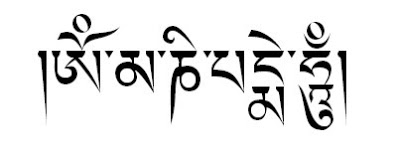
Hail the Jewel in the Lotus
This is one translation of the text
According to the Tibetan tradition, the prayer wheel lineage traces back to the famous Indian master, Arya Nagarjuna. Tibetan texts also say that the practice was taught by the Indian Buddhist masters Tilopa and Naropa as well as the Tibetan masters Marpa and Milarepa. According to the lineage texts on prayer wheels, prayer wheels are used to accumulate wisdom and merit (good karma) and to purify negativities (bad karma). In Buddhism, Buddhas and Bodhisattvas have created a variety of skillful means (upaya) to help bring practitioners ever closer to realizing enlightenment. The idea of spinning mantras relates to Also include some photos